 |
|
|
|
|
|
|
|
|
|
|
|||||||||||||||||||
 |
|
||||||||||||||||||||||||||||
|
|||||||||||||||||||||||||||||
|
|||||||||||||||||||||||||||||
|
|||||||||||||||||||||||||||||
|
|||||||||||||||||||||||||||||
|
|||||||||||||||||||||||||||||
|
|||||||||||||||||||||||||||||
 |
|||||||||||||||||||||||||||||
|
|
||||||||||||||||||||||||||||
| Posted with permission of The North Raleigh Nexus from May 2002. | |||||||||||||||||||||||||||||
 |
|||||||||||||||||||||||||||||
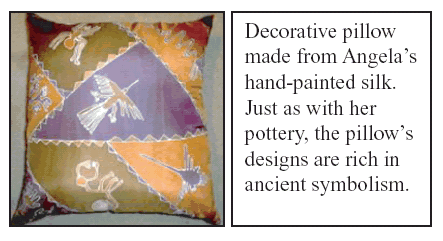
For Angela Smith, art doesn’t imitate life, and life doesn’t imitate art. They grow together, like roots and stem. One below the surface, and one above. Each depending on the other for its existence. She began to develop that philosophy at the age of 12, while beginning a two year self-imposed exile to her bedroom. “I had a very overpowering family and I felt that if I did not remove myself from the family socially, I was always going to be absorbed by them.” In the beginning of this isolated period, she read voraciously. When that wasn’t enough to occupy her creative mind, she began to paint. “It happened to me then as it happens to me now. When I start work, it can be 11:00 in the morning, and when I look up at the clock, it might be 5:00 in the afternoon and I have no idea what the heck I’ve done, or where the time went. That transcending of time is most appealing to me because it’s almost like a meditation of sorts. It’s a very introspective, very getting in touch with yourself kind of experience. It’s quiet, it’s very peaceful, it’s truly a pleasure when you come out of it.” Despite the meditative nature of her work, when Angela begins a new project, she is far from at peace with the challenge. One medium she loves to work with is white silk. She dies and paints it, creating beautiful streams of color and design. The results are stunning. The process – painful. “I have these 3 1/2 yards of silk stretched out on my stretcher, and it’s scary to me to think, ‘how am I going to mess it up?’ In truth, that’s the main fear, to mess it up, and so I just sprinkle the darn thing with something, so it’s already messed up. That gives me a lot of freedom to do what I have to do.” While she’s had no “formal” art training, Angela is
remarkably adept at applying that “mess it then fix it” attitude
to a range of mediums. Through clay, cloth, wood, metal paint and paper,
Angela communicates her beliefs about the circular nature of life, and
the significance of the basic elements and archetypes, while evolving
along with her creations. She compares this process of co-evolution to
the science of alchemy, or changing metal to gold. In the beginning, Angela was satisfied with creating art for art’s sake. She embraced the process, and was uninterested in sharing her work. As time went on, however, and her pots began to line up along the walls of every room of her house, she had an epiphany. “One day, I looked around and I said, ‘What for?’ It was all very fun and wonderful, the idea that, ‘I don’t care what people think. I don’t care if people see my work. I create because I need to create.’ I don’t think that’s valid. I thought it was, and I adhered to that for many years until suddenly it was meaningless. I thought I was going to not care what people thought. Once you realize that you are creating for nothing, it’s meaningless.”
|
|||||||||||||||||||||||||||||














 “There
were four steps that the alchemists assumed the metal went through to
acquire the gold, or the elixir of life: The negredo, which was the chaos,
was the first stage. That’s how I feel when I start something. There
is absolute chaos in my mind. I have no idea what I want to say, or how
I want to say it. Then suddenly, this light starts coming about, this
clearing of the dark elements that float in my head, and they start forming
an idea. With pottery, you start sculpting the clay to make that idea
happen. At the same time, you are going through an internal process of
negredo, or chaos, to a place of peace and rest in your own mind. So,
you go from dark to light. In clay, you go from clay to a fired object.
In alchemy, you go from negredo to gold. I feel that if I go in at 11:00,
and raise my eyes and see the clock at 5:00, something has happened to
me internally, the same way that something has happened to the clay.”
“There
were four steps that the alchemists assumed the metal went through to
acquire the gold, or the elixir of life: The negredo, which was the chaos,
was the first stage. That’s how I feel when I start something. There
is absolute chaos in my mind. I have no idea what I want to say, or how
I want to say it. Then suddenly, this light starts coming about, this
clearing of the dark elements that float in my head, and they start forming
an idea. With pottery, you start sculpting the clay to make that idea
happen. At the same time, you are going through an internal process of
negredo, or chaos, to a place of peace and rest in your own mind. So,
you go from dark to light. In clay, you go from clay to a fired object.
In alchemy, you go from negredo to gold. I feel that if I go in at 11:00,
and raise my eyes and see the clock at 5:00, something has happened to
me internally, the same way that something has happened to the clay.”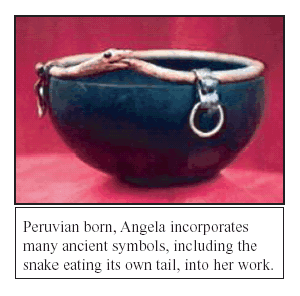 Angela
often meets people who, while admiring her work, gush about their utter
lack of creativity. Whenever possible, she gets them to come to her studio
for a brief art lesson.
Angela
often meets people who, while admiring her work, gush about their utter
lack of creativity. Whenever possible, she gets them to come to her studio
for a brief art lesson.